

The Trump administration has suspended Harvard University’s certification under the Student and Exchange Visitor Program (SEVP), effectively preventing the institution from enrolling new international students. This decision has raised concerns among Indian and other international students planning to study in the U.S.
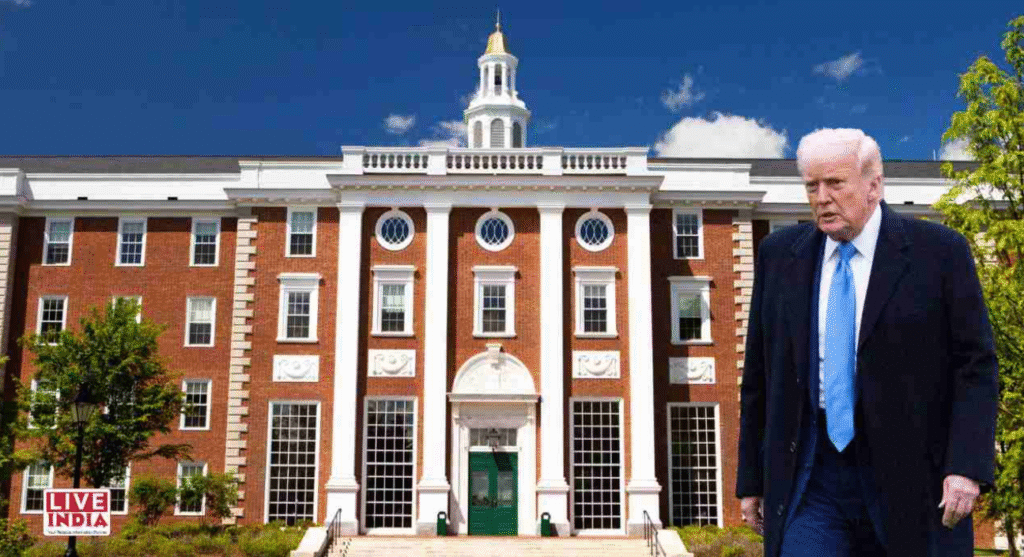
In a move that has sent shockwaves across the global academic community, the Trump administration has revoked Harvard University’s certification under the Student and Exchange Visitor Program (SEVP). This drastic decision prevents Harvard from enrolling new international students, including thousands of aspirants from India, China, Europe, and other countries.
While this marks a significant policy intervention in the realm of U.S. education, it has raised important questions about academic freedom, immigration policy, and the future of global education leadership in America.
🎓 What is the SEVP and Why It Matters?
The Student and Exchange Visitor Program (SEVP) is a crucial framework that allows non-immigrant students (F and M visas) to attend U.S.-certified educational institutions. SEVP certification is mandatory for universities and schools that wish to admit international students.
Harvard, a world-renowned Ivy League institution, has held this certification for decades. The revocation of SEVP certification implies:
- No new international students can be enrolled.
- Current students may face visa issues or academic disruptions.
- The university’s global partnerships and research initiatives may suffer.
🏛️ Why Did the Trump Administration Do This?
While the official explanation is still unfolding, early reports suggest a few key reasons:
- National Security Concerns:
The administration cited vague threats of “foreign influence” in sensitive research areas, especially from countries like China and Iran. - Immigration Control Measures:
It’s part of a broader campaign to tighten immigration and reduce foreign student dependency, especially post-pandemic. - Political Posturing:
The decision comes at a time when Trump is campaigning for the 2024 election, and hardline immigration stances are a recurring theme in his rhetoric. - Retaliation Against Elite Institutions:
The administration has often clashed with Ivy League universities over policy disagreements and liberal academic culture.
🌐 Global Reaction and Outcry
The decision has drawn widespread criticism:
- Harvard University has condemned the move, calling it “an attack on academic freedom and international cooperation.”
- Foreign governments, particularly India and China, have raised concerns through diplomatic channels.
- International students, many of whom had already received offer letters, are devastated and uncertain about their futures.
- U.S. tech and research firms—which rely on talent from these institutions—have warned about long-term consequences.
🇮🇳 What This Means for Indian Students
India is the second-largest source of international students in the U.S., with tens of thousands studying at elite institutions like Harvard, MIT, and Stanford.
Impacts include:
- Admission cancellations for 2025–26 academic year.
- Financial losses due to non-refundable application fees, travel, and visa prep.
- Loss of opportunity for high-quality global education and research.
For many Indian students, this is not just about education—it’s about career, innovation, and aspirations.
🧭 Legal and Diplomatic Options
Harvard and other affected institutions are likely to challenge the decision in U.S. courts. Potential responses include:
- Lawsuits based on academic freedom and constitutional rights.
- Lobbying by U.S. lawmakers who favor international collaboration.
- Bilateral diplomatic pressure from foreign embassies urging reversal.
Already, multiple legal experts argue that the SEVP revocation lacks due process and may be unconstitutional.
📉 The Bigger Picture: Declining U.S. Education Appeal?
This incident contributes to a growing perception that the U.S. is becoming increasingly hostile to international students, a trend that began in Trump’s first term and continued with stricter visa rules and post-pandemic policies.
Consequences may include:
- Decline in U.S. university enrollments.
- Rise of countries like Canada, UK, and Australia as preferred destinations.
- Reduced soft power and innovation potential in the U.S.
💬 Expert Opinions
“This is a reckless move that undermines America’s leadership in education and global cooperation.”
— Dr. Lisa Raymond, Professor at Yale University
“India must create domestic alternatives for students who are turned away unfairly.”
— Prof. R.K. Sharma, Indian Council of Education
“Harvard is a symbol of excellence. Targeting it sends the wrong message to the world.”
— Times Higher Education Editorial
🔍 What Comes Next?
While this decision might be reversed or challenged, it has already sparked a crisis of confidence among international applicants.
Key questions remain:
- Will other universities face similar actions?
- Can current students at Harvard continue their studies?
- Will this lead to long-term reform in international student policy?
📌 Conclusion
The Trump administration’s move to bar Harvard from enrolling foreign students is not just an institutional issue—it’s a global one. It has ramifications for education, diplomacy, economy, and human potential. Whether this is a political stunt or a new norm, the outcome will reshape how the world views American education for years to come.
📸 Suggested Featured Image:
An empty Harvard campus gate with a “No Entry” sign and flags of multiple countries