

The United States and China have agreed to a 90-day pause on new tariffs following constructive trade talks in Geneva. This development has led to a surge in global stock markets, with the Dow Jones Industrial Average rising over 1,000 points.
Summary of the Trade Truce Update:
✅ Market Reaction
- The U.S. dollar strengthened and global stock markets rose after the announcement.
- Investors were reassured following fears of an economic slowdown triggered by President Trump’s aggressive tariffs.
✅ Statements from U.S. Officials
- U.S. Treasury Secretary Scott Bessent and Trade Representative Jamieson Greer emphasized:
- The talks were productive and cooperative.
- Both countries are aiming for balanced trade, not isolation.
- Decoupling (cutting economic ties) is not a goal for either side.
✅ Impact of the Trade War
- Prior tariffs had frozen $600 billion in trade, disrupted
Global financial markets saw a boost, and the U.S. dollar strengthened after news broke of progress in trade discussions between the U.S. and China. This helped ease worries about a possible economic slowdown, which had been triggered last month when President Donald Trump ramped up tariffs to reduce America’s trade deficit with China.
Speaking after the meetings in Geneva, U.S. Treasury Secretary Scott Bessent said both countries were focused on protecting their national interests but shared a common goal: achieving fair and balanced trade. He was joined by U.S. Trade Representative Jamieson Greer, and both officials praised the talks for making progress and reducing tensions.
Bessent emphasized that neither side wanted to cut economic ties, despite earlier moves that felt like an economic blockade caused by high tariffs. Instead, both nations prefer to maintain and grow trade relationships.
The trade conflict had brought nearly $600 billion worth of U.S.–China trade to a halt, disrupting businesses, breaking supply chains, and leading to job losses. The Geneva meeting marked the first in-person negotiation between top economic leaders since President Trump returned to office and launched a new round of aggressive tariffs.
Bessent also clarified that while the current deal doesn’t remove all tariffs, it avoids targeting specific industries. The U.S. will continue to focus on rebuilding its domestic supply in critical sectors like medicine, semiconductors, and steel to reduce future risks.
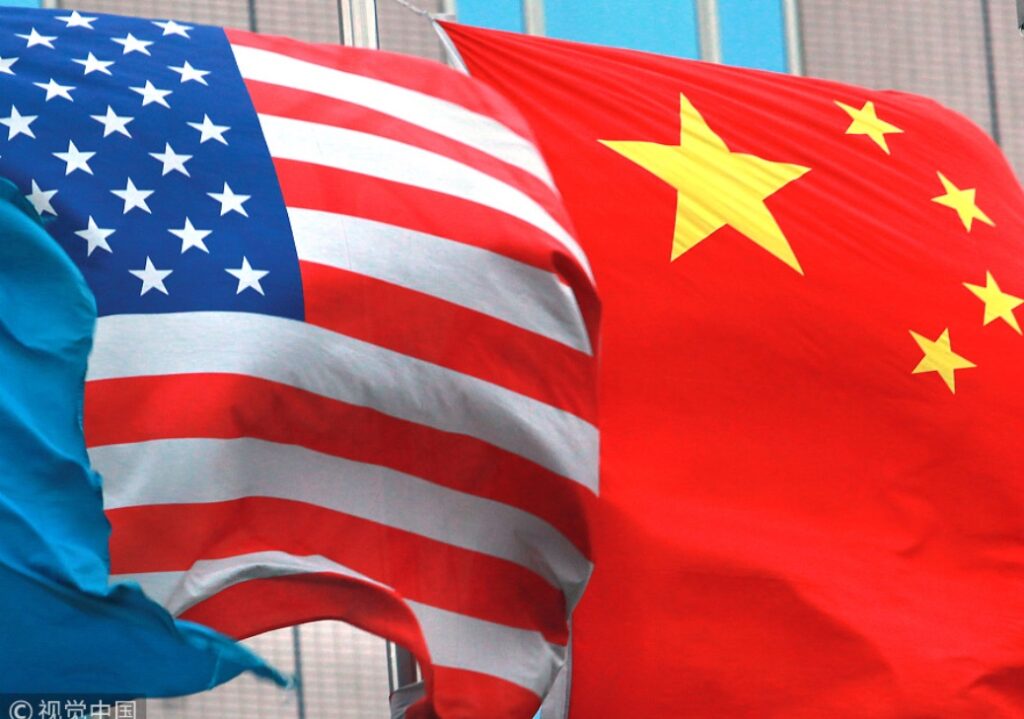
Title: US-China Trade Truce: What It Means for the Global Economy
The global financial markets breathed a sigh of relief as the United States and China reached a tentative trade truce during high-level talks in Geneva. This breakthrough came after months of escalating tensions that had threatened to derail global trade and economic stability.
A Turning Point in Global Trade
The discussions in Switzerland marked the first face-to-face meeting between senior economic officials from both nations since President Donald Trump returned to office and reignited his aggressive tariff policy. The trade war had halted nearly $600 billion in bilateral trade, strained supply chains across various industries, and triggered job losses in both economies.
But the latest round of negotiations, led by U.S. Treasury Secretary Scott Bessent and U.S. Trade Representative Jamieson Greer, signaled a new tone of cooperation. Bessent described the meeting as constructive and emphasized that both sides represented their national interests while committing to fair and balanced trade.
Avoiding Economic Decoupling
One of the most significant outcomes of the talks was the mutual understanding that neither side wants a full economic decoupling. “What had occurred with these very high tariffs was the equivalent of an embargo,” Bessent noted. “And neither side wants that. We do want trade.”
This message is especially important for global investors and multinational companies who had been bracing for a prolonged standoff. The conciliatory tone helped calm markets, with stock indices in the U.S., Asia, and Europe all climbing in response to the news. The U.S. dollar also gained strength as investor confidence returned.
No Immediate Tariff Rollbacks, But Strategic Rebalancing Ahead
While no immediate removal of sector-specific tariffs was announced, Bessent confirmed that the U.S. would continue pursuing strategic rebalancing in key industries like pharmaceuticals, semiconductors, and steel. These sectors had been identified as vulnerable due to over-reliance on foreign suppliers.
The goal, according to U.S. officials, is not protectionism but resilience. By boosting domestic capabilities in essential areas, the U.S. aims to safeguard its economy against future disruptions without severing trade ties with major partners like China.
Global Impact and Future Outlook
The truce is expected to ease fears of stagflation—a toxic mix of stagnant growth and rising inflation—that had been looming over the global economy. With trade routes reopening and tariffs paused, businesses can resume planning and investment with more confidence.
However, experts caution that the deal is still in its early stages and many unresolved issues remain, including intellectual property rights, technology transfers, and long-term tariff structures. Future rounds of talks are expected to address these complex challenges.
Conclusion
The Geneva agreement between the U.S. and China marks a critical step toward restoring stability in international trade. While it may not be the end of tensions, it reflects a willingness to cooperate and find common ground. For now, the world watches closely, hopeful that diplomacy can prevail over conflict in one of the most consequential economic relationships of our time.