

The EOS-9 satellite launch failed minutes after liftoff. ISRO is investigating the cause of the failure
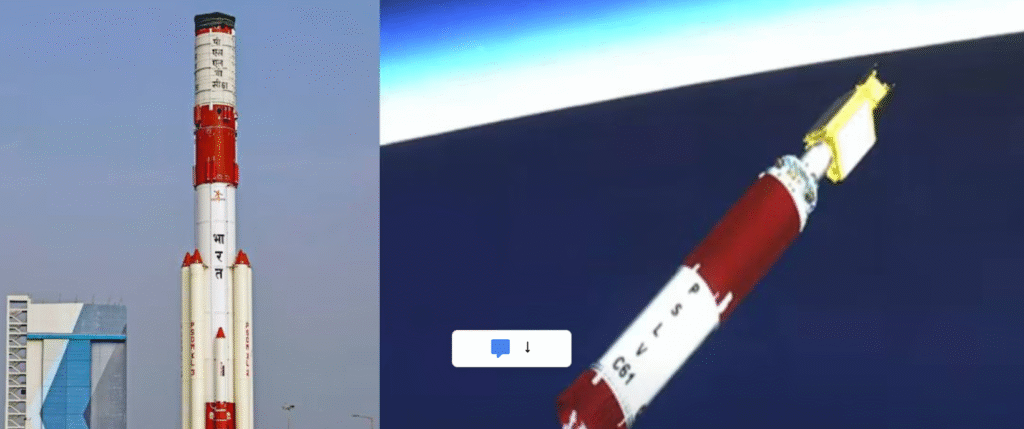
🚀 ISRO’s EOS-9 Satellite Launch Ends in Failure: What Went Wrong?
India’s prestigious space agency, ISRO (Indian Space Research Organisation), faced a rare and unfortunate setback on Sunday as its EOS-9 Earth observation satellite mission failed just minutes after liftoff.
The failure has drawn attention from space enthusiasts, scientists, and national stakeholders alike, sparking discussions about the challenges of space exploration and the road ahead for ISRO.
🛰️ What Was EOS-9?
The Earth Observation Satellite 9 (EOS-9) was designed for high-resolution imaging of India’s landmass, aiding applications like:
- Urban planning
- Agricultural monitoring
- Disaster management
- Environmental assessments
EOS-9 was part of India’s growing suite of Earth observation satellites aimed at bolstering civilian and strategic surveillance capabilities.
📍 Mission Timeline
- Launch Date: May 18, 2025
- Launch Site: Satish Dhawan Space Centre (SDSC), Sriharikota
- Launch Vehicle: PSLV-C62
- Failure Point: T+3.6 minutes post-liftoff
⚠️ What Went Wrong?
Initial reports from ISRO indicate a “technical anomaly” in the third stage of the PSLV launch vehicle. The rocket deviated from its trajectory, and telemetry data was lost shortly after.
In a brief statement, ISRO said:
“The PSLV-C62 mission carrying EOS-9 encountered an anomaly during the third stage of flight. The mission could not be accomplished as intended. A failure analysis committee has been constituted.”
🔍 Why This Matters
- Strategic Importance:
EOS-9 was intended to play a major role in India’s Earth observation network. Its failure impacts multiple ministries and research institutions. - Impact on Confidence:
Though ISRO has a robust track record, every launch failure draws scrutiny and affects timelines for future missions. - International Attention:
With ISRO’s global reputation rising, such incidents are closely watched by partners and competitors in the global space race.
🧠 Expert Opinions
Space experts have called the failure a reminder of the complexity and risks involved in rocket science.
“ISRO has had a remarkable streak of successes. Failures, though rare, offer critical data that eventually improve reliability,” said aerospace analyst Dr. Manjeet Singh.
🛠️ What Happens Next?
- A Failure Analysis Committee (FAC) will investigate the cause in detail.
- ISRO will release a public report and recommendations within the next few weeks.
- Future missions like Chandrayaan-4 and Aditya-L2 are unaffected for now, according to senior ISRO officials.
📊 A Look at ISRO’s Track Record
Despite the EOS-9 failure, ISRO maintains a high success rate for its satellite launches:
| Year | Total Launches | Successes | Failures |
|---|---|---|---|
| 2022 | 6 | 6 | 0 |
| 2023 | 8 | 7 | 1 |
| 2024 | 9 | 9 | 0 |
| 2025 | 3 | 2 | 1 (EOS-9) |
📢 Final Thoughts
While the EOS-9 failure is a setback, it is also a learning opportunity. ISRO’s resilience and history of bouncing back stronger have proven time and again that progress in space is built on both success and failure.
The agency’s focus now will be on understanding what went wrong, fixing the issue, and continuing its ambitious pursuit of excellence in space exploration.
🗨️ Join the Conversation
Do you think ISRO should reattempt the EOS-9 mission with upgraded systems? Share your thoughts in the comments below. Let’s discuss India’s journey to the stars 🌌